Questões de Concurso
Filtrar
1.218 Questões de concurso encontradas
Página 18 de 244
Questões por página:
In the past, people didn’t get the chance to educate themselves. Most people used to work on farms. Yet with time, people started to go to religious institutes like churches and temples to learn. Then, later, after the industrial revolution, even the children of agricultural families were sent to the town to learn how to work with the machinery. With colonization, people also started learning languages and sciences. The most important fact is that all these changes in education happened only in men’s lives. Women were kept at home to do the daily work.
(Available on: https://aprendafalaringles.com.br/texto-com-verbos-em-ingles/. Accessed on: October 2025.)
Since the highlighted verbs in the text express situations and events that belong to a specific time period depicted by the author, the main verb tense used in the text is:
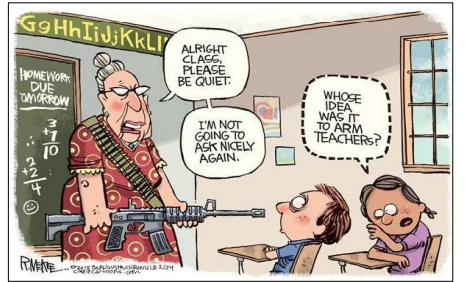
Check visual and verbal information in the comic image below:
(Available on: https://inglesnoteclado.com.br/wp-content/uploads/. Accessed on: October 2025.)
The teacher uses the expression “I’m not going to ask nicely again” to convey her intention and decision about what will happen next. The use of “be going to” indicates:
Consider the statements below about English grammar. Mark each one as True (T) or False (F):
(__)Modal auxiliary verbs, such as can, may, and must, do not change according to the subject and express meanings such as ability, permission, and obligation.
(__)Phrasal verbs always have literal and predictable meanings that can be easily inferred from the verb and the particle.
(__)Prepositions and adverbs perform the same grammatical function in all contexts, even when expressing time, manner, or place.
Choose the alternative that presents the correct sequence:
First column: phrasal verbs
1.To remain at the same level
2.To become weaker
3.To rely, to expect
4.To behave badly
5.To destroy something
Second column: sentences
(__)Hurricane Melissa is expected to die down over the next few days.
(__)She runs too fast, I just can't keep up!
(__)Her mom tore up the note after reading it.
(__)He is not reliable, so don't bank on his support.
(__)The boys are acting up in the living room.
